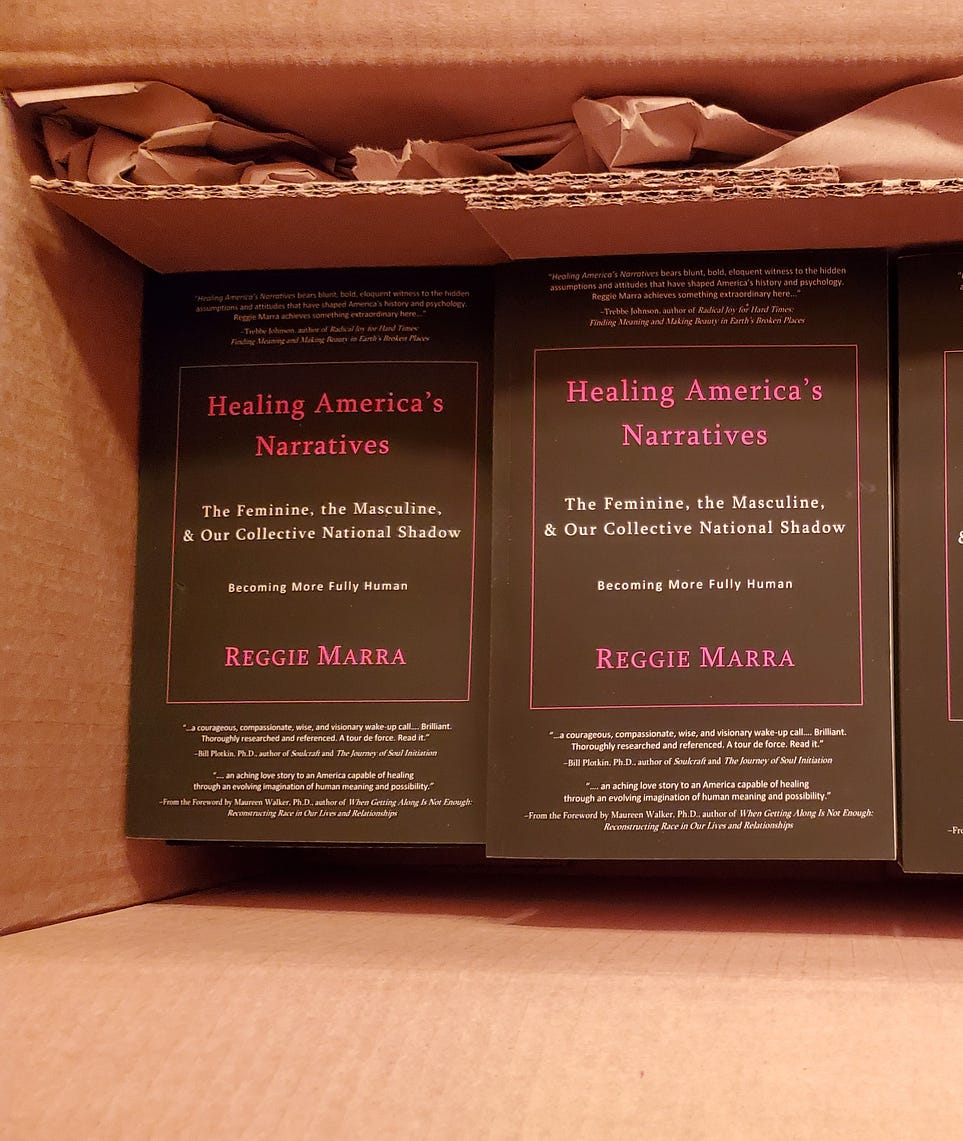
Healing America’s Narratives: Money, Elections, Democrats, Republicans, & Money

Photo © by Maria Thalassinou on Unsplash

Part of a series, this essay explores aspects of the idiocy that characterize America’s two-party approach to political campaigns. Healing America’s Narratives: The Feminine, the Masculine, & Our Collective National Shadow.Now available.

Note: I am an unaffiliated voter — I am a member of neither the Republican nor the Democratic party. I used to be a member of one of them, and am still more generally aligned on most issues with that party. This essay captures the essence of why I dropped my membership with one party and why I would never become a member of the other party.

From October 20, 2022 through the publication of this essay, I received over 500 emails asking me for money in support of candidates for office in states in which I do not live. More than 300 of those emails came after election day, November 8, and specifically asked for money regarding the Georgia Senate runoff. I also received a significant number of snail mail documents — all of which were focused on local elections for the town, state, and national districts in which I actually live.

Between October 21 and November 5, I made four modest (two-figure) contributions to the campaigns of candidates whose positions on most issues I generally agree with. Despite the 300-plus emails that arrived in my inbox after election day, and despite my strong support for one of the two Georgia Senate candidates, I did not contribute to the runoff campaign.

Here’s why, and this is equally applicable to the Democratic and Republican parties and their leadership: if you really believe that the only way you can win and govern is by telling me multiple times a day you need another $250,000 by tonight’s (and tomorrow’s and the next day’s…) deadline — amounts and deadlines that you conjured within a system that you created— and that you’re counting on my $35 or $45 or $75 (which you’re willing to quadruple!!!) in order to outspend the other party’s extensive fundraising; and if you’re going to continue to ask me for money multiple times a day WHETHER OR NOT I MAKE A CONTRIBUTION this time; and if your requests are characterized by BOLD AND CAPS and yellow highlights (which I can’t reproduce here), then you must think I’m an idiot (I’m not, for the most part). Those highlighting tactics are consistent with what used to be used on late-night television commercials for kitchen gadgets, pain-relief gadgets, and OTHER important and REALLY good DEALS! They may still be used, but I don’t stay up late anymore.

Plus, if you can actually quadruple all those modest contributions, why do you need them at all? Just use the cash you already have on hand for quadrupling. The problem is that you (Republican and Democratic leadership) make the case that what’s needed to save the country (from each other) is more money from me and other citizens. You use this money for advertising. You advertise using hyperbole, insult, and distorted photos of your opponents (i.e. each other).

What the hell is wrong with you?

Yes, I understand that you wouldn’t be behaving as you do if you didn’t have research-based evidence that it works on American voters who suffer from civic (and other types of) ignorance.

Here’s one specific example — my views on a letter I received from a candidate in a race to represent me in Congress. The lowlight of this particular letter was the candidate’s (or his handlers’) attempts to associate his opponent with the “defund the police” folks. His opponent’s spouse is a veteran police detective. That’s a rather tame example, but it makes the point.

So again, I ask, what the hell is wrong with you?

Healing America’s Narratives: The Inevitability of the Current Mood of the United States

Photo © by tom coe on Unsplash

Part of a series, this essay explores the inevitability that surfaced amid the research for and writing of Healing America’s Narratives: The Feminine, the Masculine, & Our Collective National Shadow. Now available.

If we begin with Jamestown, Virginia in 1607 and work our way forward through each day since then, especially those days not included in some of the more (in)famous years like 1619, 1776, 1787, 1830, 1865, 1868, 1920, 1945, 1964, 2001, 2003 (et cetera)¹ and into our current state of affairs in the third decade of the twenty-first century, where we are as a country is inevitable. Said differently, our ignorance, arrogance, fear, bigotry, violence, greed, excess, bullying, and untrustworthiness are not surprising.

In his Pulitzer Prize-winning A Bright Shining LieNeil Sheehan wrote this about the 1968 My Lai massacre in Vietnam:

“What Calley and others who participated in the massacre did that was different was to kill hundreds of unarmed Vietnamese in two hamlets in a single morning and to kill point-blank with rifles, pistols, and machine guns. Had they killed just as many over a larger area in a longer period of time and killed impersonally with bombs, shells, rockets, white phosphorous, and napalm, they would have been following the normal pattern of American military conduct. The soldier and the junior officer observed the lack of regard his superiors had for the Vietnamese. The value of Vietnamese life was systematically cheapened in his mind…. The military leaders of the United States, and the civilian leaders who permitted the generals to wage war as they did, had made the massacre inevitable.”²

Sheehan’s words indict the worst of leadership that arise through unhealthy masculine energy. Be it military or civilian, local, state, or national, such leadership renders inevitable, or at least highly likely, horrors such as My Lai in 1968; the mutilation and slaughter of Cheyenne men, women, and children at Sand Creek in 1864; the massacre of Lakota men, women, and children at Wounded Knee in 1890; the more than 6,000 lynchings of blacks between 1865 and 1950; the incineration of Tulsa, Oklahoma’s Greenwood district in 1921; the degradations of Abu Ghraib and Guantanamo in the post-9/11 war on terror; and the incessant gun violence in the U.S. Among other examples.

In response to a school shooting at Oxford High School in Michigan, two members of the U.S. House of Representatives³ created Christmas photo cards, posing their families holding assault rifles in front of Christmas trees in 2021 in support of the weapons commonly used in U.S. Congress-enabled mass shootings. Evidently, these folks were channeling the intersection of what Jesus meant when he said “Love one another,”⁴ and what the framers had in mind when they penned the Second Amendment.

That’s a small sample of evidence regarding the inevitability of our current culture of violence. What about greed and excess, you ask? A country built on slave and peasant labor, sweatshops, migrant workers, and now cheap international labor renders inevitable a 2022 second quarter report that the wealthiest 1% of Americans own 31.1% of the nation’s wealth; the top 10% own 68%; and the bottom 50% own 3.2% (the 40% of Americans who fall between the bottom 50% and the top 10% own 28.9%). Said differently, the top 10% of Americans own more than twice (68%) of what the bottom 90% own (32%). This is like saying that the folks in Texas and Montana (together about 10% of the nation’s population) own more than twice as much wealth as the rest of the country. In a nation where owning and having things is important, this is a big deal.

Here’s one more juxtaposition: the defense industry — those companies that build and maintain the weapons and infrastructure of war and everyday violence, and the insurance-pharmaceutical-medical-government-finance-lobbying industry (euphemistically referred to as healthcare in the U.S.) are both for-profit endeavors. Need more deterrence, want to go to war, or choose to keep assault weapons available to our huddled masses? Cha-ching. Need to attend to the physical and psychological effects of war, everyday violence, and active shooter drills for school children? Cha-ching. Need to make sure none of this changes? Have more lobbyists in D.C. (more than 700) than there are members of Congress (currently 535 when all seats are filled).

The above are selected, limited examples, painted with broad brush strokes. For more specific information, see Healing America’s Narratives: The Feminine, the Masculine, & Our Collective National Shadow.

_____

  1. Briefly: 1619 (initial delivery of enslaved Africans to what is now Virginia by the British); 1776 (U.S. Declaration of Independence); 1787 (U.S. Constitution); 1830 (Congress passes “Indian Removal” Act); 1865 (Civil War ends; 13th Amendment passed); 1868 (14th Amendment passed; Second Fort Laramie Treaty); 1920 (19th Amendment passed); 1945 (U.S. drops two atomic bombs on Japan; World War II ends); 1964 (Civil Rights Act passed); 2001 (September 11 terrorist attacks on U.S.); 2003 (U.S. preemptively attacks Iraq).
  2. Neil Sheehan, A Bright Shining Lie: John Paul Vann and America in Vietnam, (New York: Random House, 1988), 689–90.
  3. Lauren Boebert (R-Colorado) and Thomas Massie (R-Kentucky): https://www.nbcnews.com/think/opinion/christmas-card-guns-lauren-boebert-thomas-massie-start-new-culture-ncna1285709
  4. For younger readers: Christmas began as a celebration of the birth of Jesus Christ and had nothing to do with retail sales, garishly decorated real and fake trees, and assault weapons.

Healing America’s Narratives: Who Are My People?

Photo © by Brittani Burns on Unsplash

Part of a series, this essay explores a subheading from Chapter Eleven of Healing America’s Narratives: The Feminine, the Masculine, & Our Collective National Shadow. Now available.

Who Are My People?

In the perfectly integrated, comprehensive, inclusive, and balanced universe in which most of us do not (think we) live, we can hear the mystical cheerleaders’ rhythmic, enthusiastic, and obvious response echoing around the arena: EV-ree-one! Where most of us do think we live, it can be helpful to have a sense of who our people are — not in the unhealthy us-against-the-others sense that governs most finite games, but in the sense of realistically assessing how and with whom I might do the most good in the world as it is, with what I have to offer, without harming others, to the benefit of the whole shebang. Taking care of my, or our, little niche is often the best way to serve the greater good.

Often, the answer to this question lies not in some definitive choice we make but in our authentic attention to the intersections of who we think we are, the stories we choose, the impacts we both have and receive, and what we are able to uncover and own that we previously had not seen. While “my people” may be superficially identified, or at least narrowed down, through blood, geography, and chronology, they are inevitably found and known through experience, belief, and worldview. They include those I learn from and learn with and those who learn from me — whether the learning emerges in the classroom, on the street, at the checkout counter, in the healthcare office, at work, or at the kitchen table. Consider the words of Ta-Nehisi Coates, as his writing led him into “contact with more human beings”:

“I had editors — more teachers — and these were the first white people I’d ever really known on any personal level. They defied my presumptions — they were afraid neither for me nor of me. Instead they saw in my unruly curiosity and softness something that was to be treasured and harnessed.”¹

The friends we choose and who choose us in childhood and adolescence, the groups we align with when we choose a craft, profession, or area of study (or one chooses us), and the individuals in our chosen craft, profession, or discipline towards whom we gravitate may provide insight and evidence about, but don’t necessarily define, “our people.” Many folks will come, stay for a while and go; others will come and stay. We begin to recognize some who stay, and even some who go, as our people.

As tempting as it can be to espouse an all-of-us perspective and claim everyone as our people (as those mystical cheerleaders did above), if we’re operating primarily from a Body-Mind identity, it is difficult to embody and live up to that claim — despite its value and attractiveness. Better to live in a healthy embodiment of who our people truly are right now, than to delude ourselves with an espoused, but not yet embodied and lived, self-aggrandizing claim.

Still, part of our intentional practice might be to “act as if” all humans are our people and to see how such practice impacts our sense of self, our beliefs about others, and our behavior.

_____

  1. Ta-Nehisi Coates, Between the World and Me, (One World-
    Random House, 2015), 62.

Healing America’s Narratives: What Am I Not Seeing?

Part of a series, this essay explores a subheading from Chapter Eleven of Healing America’s Narratives: The Feminine, the Masculine, & Our Collective National Shadow. Now available.

In our previous three inquiries into subheaders from Chapter Eleven, “So, Now What?” we explored identitystory, and impact. Here we’ll consider what any one of us — or millions of us — might be missing with regard to our own lives and/or our country. “Shadow,” as it’s referred to throughout the book, is one reason, among others, an individual or a collective might not be seeing something.

There are various ways to work with Shadow.¹ One hint that an element of Shadow may be clamoring for our attention is if we notice a disproportionate emotional response to someone or something — especially if that response recurs. So, a recurrent, disproportionate, emotional response to someone or something we experience as being angry or lacking in compassion may be inviting us to explore our own anger or lack of compassion. Likewise, if we have such a response to someone or something we experience as exceptionally creative, generous, or successful, we may want to explore our own as-yet disowned creativity, generosity, or success.

Whether what we’re not seeing is considered positive or negative, recognizing, owning, and integrating it into our sense of self leads to a more integrated, “wholer,” fully human being.

Questions such as these may begin to uncover what might be repressed, denied, and projected:

1. What is it about this situation, person, event, issue, idea, emotion, or dream, such that I respond as I do?

2. What is it about me, such that I respond to this situation, person, event, issue, idea, emotion, or dream as I do?

3. To what extent do my reactions or responses feel disproportionate?

4. What might I be projecting onto this situation, person, event, issue, idea, emotion, or dream that I need to explore in myself?

The first question engages through an external locus of control. It helps begin to identify the source of the disproportionate response by looking toward something out there. Getting clearer about what that something is moves us closer to identifying Shadow — what we don’t yet see or know about ourselves.

The second question engages through an internal locus of control and is more challenging. It implicates us. What is it about me such that I respond as I do? Ooh, is my discomfort with his ease in expressing anger related to my unowned anger? Is my admiration for her success in the art world the result of my own as-yet-unrealized creative potential? What is it, exactly, that brings up my disproportionate response? Now, I’m curious. Repressing and projecting parts of ourselves requires energy. Owning and integrating what we repress and project frees up our energy for other aspects of life.

The third question invites us to authentically consider the extent to which our response is disproportionate to the reality of the situation, person, or thing. Honest, challenging, trusted friends may be helpful here.

The fourth question explores the quality, emotion, trait, or characteristic that may be repressed, denied, and projected. Sometimes we recognize it immediately, and perhaps experience a mix of relief, guilt, or simply, oh, THAT! Sometimes it may be slower to emerge — harder to see and even harder to own and integrate. Oh. That. Me? Lacking compassion? Nah. No way. For that one particular colleague/friend/sibling…? Um, perhaps, yes.

Working with Shadow can be discomfiting. Be kind to yourself.

  1. Among many, see Bill Plotkin’s Wild Mind (207–34) and Soulcraft (267–80); and Connie Zweig and Jeremiah Abrams, eds. Meeting the Shadow (65 essays from a variety of authors).

Healing America’s Narratives: What’s My Impact & What Impacts Me?

Part of a series, this essay explores a subheading from Chapter Eleven of Healing America’s Narratives: The Feminine, the Masculine, & Our Collective National Shadow. Now available.

What’s My Impact & What Impacts Me?

What’s my impact — what’s the nature of the wake I’m leaving as I swim, paddle, sail, or otherwise make my way along the river or across the ocean of life? How does my wake impact other vessels and the water itself, and to what extent am I aware of this impact?

What impacts me — what is the nature of the impact on me of other vessels, the wakes they leave, and the river or ocean itself? Less metaphorically, what beliefs, behaviors, habits, cultures, relationships, environments, systems, and people affect me; to what extent, large or small, do they affect me; and what, if anything, am I doing or can I do about it?

With such questions, it helps to explore the broadest, deepest view available of my current beliefs, behaviors, relationships, and environments. Shining the light of awareness on my current awareness — witnessing myself as I am — is a significant practice. What interiors and exteriors impact who and how I am? Whether, when, where, and how I choose to shine this light of awareness emerges from the story I hold (or that holds me) about who I think I am, and the worldview — focused on me, us, all of us, or all that is — that holds my story.

The world of experience continues to offer additional givens throughout our lives. The concrete manifestation of our earliest and ongoing givens are the literal infrastructures and systems — the natural and human-made environments — in which we live our lives, from the tablet, computer, or phone you’re using right now, to the physical space you’re in, to the electricity or to the sun itself that lights that space. Cultural givens and environments co-arise, co-relate, and impact each other and each of us. Beliefs and values lead to things and systems, which in turn revise and create beliefs and values — which in turn lead to new things and systems.

Intentional fire, writing, the wheel, horticulture, agriculture, gunpowder, the printing press, steam power, trains, electricity, internal combustion, the automobile, paved roads, airplanes, the assembly line, the radio, television, space travel, atomic power, computers, robotics, the World Wide Web, smart phones, social media and many other technologies shaped and shape our environment, and, in turn, they shape us. Way back in the previous century, Neal Postman proposed six questions that are worth exploring each time a new technology is being developed or emerges:

1. What is the problem to which this technology is a solution?

2. Whose problem is it?

3. Suppose we solve the problem and solve it decisively, what new problems might be created because we solved the old problem?

4. Which people and what institutions might be most seriously harmed by a technological solution?

5. What changes in language are being enforced by new technologies and what is being gained and lost by such changes?

6. What sort of people and institutions acquire special economical and political power because of technological change?¹

The importance of these types of questions occurs at the intersections of everything is a story, technological impact, and who we think we are. Here are some variations on a theme:

1. How does who you think you are impact what stories you are telling yourself about the impact of the technologies you choose to use or must engage with every day?

2. How do the stories you tell yourself impact who you think you are and the technologies you choose to use or must engage with every day?

3. How do the technologies you choose to use or must engage with every day impact the stories you tell yourself about who you think you are?

The above is not an attempt at cleverness. Consider spending some time with these questions in the context of what you believe is true, first in your own life, and then in the history and current affairs of the United States. Identity, story, and impact matter.

_____

1. Neal Postman, “Staying Sane in a Technological Society: Six Questions in Search of an Answer,” Lapis, (New York Open Center, Issue 7, 1998), 53–57.

Healing America’s Narratives: Everything Is a Story

Part of a series, this essay explores a subheading from Chapter Eleven of Healing America’s Narratives: The Feminine, the Masculine, & Our Collective National Shadow. Now available.

Everything Is a Story

Note your immediate response to this premise. Is it, ‘What do you mean — please explain?’ or, ‘Bullshit…?’ or ‘Du-uh, tell me something I don’t already know?’ Perhaps it’s ‘Thank you for confirming what I was beginning to see?’ Is it something else entirely? Whatever it is fine — it’s your story about the suggestion that everything is a story. Consider that if your response was in the general area of Bullshit.

The cultural givens handed down by our parents and earliest communities and experiences are stories. As (or if) we grow up, wake up, clean up, and show up, some stories hold up and some don’t. Sometimes the givens that don’t hold up were false when we received them and sometimes they were true — as far as anyone knew at the time — but the larger, always evolving community of truth learned more and disproved them when new evidence was found.¹ Doctors no longer recommend smoking cigarettes as a way to relax. Planet Earth is no longer considered the center of the universe.

The stories we choose to believe and tell, as well as the stories that choose us, are powerful. Being in the position to choose our stories and not be chosen by them carries power. Mary Catherine Bateson encourages us to exercise this power:

“…think about the creative responsibility involved in the fact that there are different ways to tell your stories. It’s not that one is true and another is not true. It’s a matter of emphasis and context…. The choice you make affects what you can do next.”²

So, let’s be thoughtful about the stories we choose to tell about who we (think we — and they) are. The choices we make and the stories we tell matter.

Consider the specific stories that inform(ed) your cultural givens. What holds up? What’s the most recent revision you’ve made, or that was made for you, where revision actually means re-vision — to see again? Look at the sweeping revisions, many ongoing, in the earlier essays in this series, and the specific, personal revisions shared therein, such as Robert McNamara’s ‘re-visioned’ view that owned the extent to which he and the other architects of the Vietnam war misjudged, underestimated, failed, and did not recognize a long list of people and ideas.

Such seeing again is never easy and always valuable when it moves the seer toward a more comprehensive, inclusive view. Malcolm X’s life stands as an exemplar of re-visioning. Two of his major re-visions — becoming a Muslim and joining the Nation of Islam while in prison and then leaving the Nation of Islam while remaining a Muslim after his 1964 Hajj — follow the developmental trajectory from a focus on me to a focus on us to a focus on all of us. In each case he changed his name and publicly recognized and owned his seeing again.³

How we tell our stories is as important as which stories we tell. Focus only on what’s wrong and get an “illness” story. Open up to the possibilities of moving through and beyond what’s wrong and tell or write a “healing” story. Adults model both of these for children: if the child who falls down the stairs and breaks an arm is confronted with parental overwhelm, blame, anger, and fear, an illness story emerges in which stairs are dangerous and the child is careless or clumsy; if the child is met with parental support, concern, acceptance, understanding, and love, a healing story emerges in which accidents can happen, stairs are useful and fine and best engaged with care, and the child is curious and open to experience.

Illness stories limit us, narrowly focus on a sense of wrongness, keep us stuck, and can reinforce trauma; healing stories open up the context in which we understand what happened (wrongness may be relevant, but not primary), they can expand and free us, and they can contribute to trauma recovery. Because they focus on what’s wrong, illness stories are often tidy, brief, stagnant, partial, and consistent. Because they emerge through and invite increasingly larger contexts, healing stories are often messy, ongoing, progressive, comprehensive, and paradoxical. Explore your stories. Be kind to yourself.

Writing can be engaged as a powerful process⁴ that helps open us up to increasingly larger contexts that allow us to see and feel as others see and feel — to go beneath all the individual differences, see another soul just like ourselves, and at the same time deeply understand and embody those differences. Going one step further, learning to embody and tell or write someone else’s story, both helps us understand the other and often provides clarity into our own narrative.⁵

Finally, if I’m truly playing an infinite game,⁶ some questions may arise at the intersection of “who am I, really?” and “everything is a story.” Try these questions on for size: Without the stories I hold and that hold me, who am I, and what’s true in this moment? Who am I and what does this moment offer without my story/ies? Ram Dass’s channels four and five point toward a prospective answer. John Tarrant, in Bring Me the Rhinoceros, put it this way:

“Everyone knows that some events are just bad and make you sad or angry, and some are good and make you glad. Yet what everyone knows might not be true. For example there might be a certain coercion to the attitude that weddings must be happy, funerals have to be sad. It could prevent you from meeting the moment you are in. What if events don’t have to be anything other than what they are?”⁷

We owe it to ourselves and each other to create and tell our stories with care.

__________

1. See Jonathan Rauch’s The Constitution of Knowledge: A Defense of Truth (Brookings Institution, 2021) for an expansive and passionate exploration of his book’s title and the “community of truth.”

2. Mary Catherine Bateson, “Composing a Life,” Sacred Stories: A Celebration of the Power of Stories to Transform and Heal. Eds. Charles & Anne Simpkinson, (HarperSanFrancisco, 1993), 42–43.

3. M.S. Handler, “Malcolm Rejects Racist Doctrine,” New York Times, October 4, 1964, https://www.nytimes.com/1964/10/04/archives/malcolm-rejects-racist-doctrine-also-denounces-elijah-as-a.html; Alex Haley, The Autobiography of Malcolm X: As Told to Alex Haley, (New York: Ballantine, 1992).

4. James Pennebaker has led the way in decades of research that back this up. See his Expressive Writing: Words that Heal, co-authored with John Evans, (2014); and Opening Up: The Healing Power of Emotions (1990), among others. See also John Fox’s Poetic Medicine: The Healing Art of Poem-Making, (1997). There are many more resources available.

5. See Marra, Enough with the Talking Points, (2020), 79–82 for more on truly embodying another’s story. For a deeper dive into telling another’s story as if it were our own, see the work of Narrative 4, which uses “story exchange” to help young (and old) people develop empathy. (Some meeting “icebreaker” exercises skim the surface of this experience: two strangers briefly share who they are and then introduce each other to a group — speaking in first-person, as if they are the person they’re introducing. Narrative 4 goes deeper): https://narrative4.com/.

6. Inspired by James P. Carse, Finite and Infinite Games: A Vision of Life as Play and Possibility (Free Press-MacMillan, 1986). An infinite game is one in which the goals are to invite everyone to play and to keep the game going. A finite game is one in which the goal is to limit the players, win, and end the game.

7. John Tarrant, Bring Me the Rhinoceros, (Shambhala, 2008/2004), 113.

Healing America’s Narratives: Who Am I, Really?

Part of a series, this essay explores a question raised in Chapter Eleven of Healing America’s Narratives: The Feminine, the Masculine, & Our Collective National Shadow. Now available.

Who Am I, Really?

If you’re sure you know and are ready to dismiss the question, what follows may be a waste of your time — or exactly what you need. Here are five prospective responses. They are neither mutually exclusive nor exhaustive. Add your own.

1) I am a mystery that I explore more deeply every day.

2) I am a mix of elements that’s worth four or five bucks.

3) I am the result of the exploits of God, Adam, Eve, and that horrible snake.

4) I am a ___-year-old, ____-generation _______-American ___________ [ your occupation] from _________.

5) I am a child of the stars.

The identity story I choose (or that chooses me) provides a unique view of myself and the world and a wildly different array of possibilities for my need for healing, my views on Shadow, and life in general. Every human being in the history of humanity had a sense, clear or vague, conscious or unconscious, of who they (thought they) were. We’ll engage this question through three distinct, interrelated perspectives — Body-Mind (aka middleworld), Soul (aka underworld), and Spirit (aka upperworld).

Body-Mind, or middleworld, as used here, refers to our conventional, everyday lives. We do, think, and feel, and we recognize, to various degrees, the connections among doing, thinking, and feeling. Our thoughts and feelings impact what we do and vice versa. In terms of our who-am-I inquiry, the Body-Mind perspective encourages us to assess skills, strengths, likes, dislikes, and aspirations in order to identify with a job, social role, or occupation. We are educators, plumbers, nurses, stay-at-home-parents, and truck drivers, etc. From a Body-Mind perspective, our job may be a valid response to that pesky question famously asked by Mary Oliver, “…what is it that you plan to do / with your one wild and precious life?”

Turning toward Soul, we learn from eco-depth psychologist, Bill Plotkin, that our “soulwork…does not correspond to a job title.” Howard Thurman directs us to find “what makes [us] come alive.” Frederick Buechner refers to “the place where [our] deep gladness and the world’s deep hunger meet.” Harvey Swift Deer speaks of “sacred dance,” and William Blake wrote of being “organized by Divine Providence for Spiritual communion.”¹

These various takes on a similar theme begin to move us beyond job descriptions and earning an income (each of which has its place) toward a somewhat deeper inquiry. Plotkin and Swift Deer differentiate soulwork or sacred dance from survival work or survival dance, which, in no way deprecatory, simply refer to “our way of supporting ourselves physically and economically….”² Aptitude and career tests and other Body-Mind assessments can be useful for matching us with survival work we might enjoy, and rarely, if ever, address soulwork, sacred dance, deep gladness, spiritual communion, what brings us alive, or what poet David Whyte calls the “one life / you can call your own.”³

Plotkin works with Soul as an ecological, rather than a psychological or spiritual, entity, referring to it as one’s “ultimate place,” or one’s “unique ecological niche” (“eco-niche”).⁴ Discovering one’s ultimate place or unique ecological niche in the world feels very different from getting a really good job with good pay and benefits. Our task from a Soul perspective is to find and create delivery systems that allow us to “offer our unique gift to the world.”⁵ These delivery systems change as we develop and are not who we are. They may manifest as survival work, soulwork, or both. For example, writing, teaching, and coaching are among my delivery systems.

From a Spirit or upperworld perspective, self-inquiry has been around at least from the beginning of the Advaita Vedanta tradition as a means of exploring this question. One iteration guides us through asking and returning to the question, “Who am I?” in a way that gradually eliminates who and what I am not. When I notice what arises in awareness (externals like clouds, sore muscles, job title, and cars, and internals like emotions, thoughts, concepts, and beliefs), I objectify and eliminate what I am not, as in “This cloud arises in my awareness, but I am not this cloud,” “This thought arises in my awareness, but I am not this thought,” “This pain arises…but I am not this pain.” Eventually I may get curious about “in whose awareness does all of this arise?” Who is this observer/witness? Who am I, really? Of course, this observer, or witness, or awareness itself is just another thought or concept until and unless I directly experience it. Then all heaven can break loose, until I get distracted again.⁶

Body-Mind, Soul, and Spirit perspectives each offer something of value. The center of gravity of our democratic, capitalist, American culture privileges the Body-Mind, replaces or dilutes Spirit with conventional, middleworld religious beliefs and requirements that usually protect us from any direct experience of Spirit, and generally ignores Soul — as Plotkin has developed it — or uses it in a variety of often disparate ways.

Ram Dass, in his teachings on change, aging, and death, shared a metaphor for waking up through these who-am-I perspectives or states of consciousness: he asks us to imagine that we each have a built-in receiver that picks up planes of consciousness. Most of our American receivers are tuned to pick up just one or two of the available channels — channel one’s physical traits (shapes, sizes, and colors, etc.) and channel two’s moods, emotions, and social roles. We don’t pick up more because middleworld culture doesn’t teach us (or know) how to fully tune our receivers. Said differently our American culture’s center of gravity holds a Body-Mind/middleworld perspective. We have not, as a culture, learned to tune into, nor do we seem to value, the Soul- and Spirit-based perspectives available on channels three, four, and five.⁷

Of course, amid our cultural attunement to channels one and two, some individuals do have access to additional channels. What channels are you attuned to? What’s your view on all of this?

Which leads us to story…in the next essay.

__________

¹Mary Oliver, “The Summer Day,” New and Selected Poems, (Beacon, 1992), 94. Bill Plotkin, Nature and the Human Soul: Cultivating Wholeness and Community in a Fragmented World, (New World Library, 2008), 316. Howard Thurman attribution: https://quoteinvestigator.com/2021/07/09/come-alive/. Frederick Buechner, Wishful Thinking: A Seeker’s ABC, (HarperOne, 1993), 118–19. Harvey Swift Deer, in Plotkin, Nature…, 258. William Blake, The Complete Poetry & Prose of William Blake, David V. Erdman, ed., (U of California P, 1981), 724.

²Plotkin, Nature and the Human Soul, 258.

³David Whyte, “All the True Vows,” The House of Belonging, (Many Rivers, 1997), 24.

⁴Plotkin, “ultimate place” in Nature and the Human Soul, 35–38; “unique ecological niche” in The Journey of Soul Initiation: A Field Guide for Visionaries, Evolutionaries, and Revolutionaries, (New World Library, 2021), 6–17. A 52-minute interview with Bill is available here (there are more): https://www.youtube.com/watch?v=uOTaKXHMabM

⁵Plotkin, The Journey of Soul Initiation, 18.

⁶This paragraph is meant to be descriptive, not instructive. My encounter with self-inquiry began with the writings of David Frawley and Ken Wilber, which led me to Ramana Maharshi’s work. Here’s a link to Frawley’s writing from 1998: https://www.vedanta.gr/wp-content/uploads/2012/03/Frawley_SelfInquiry_ENA5.pdf. Online references to self-inquiry are abundant and unequal. Inquirer beware.

⁷Ram Dass, “The Art Form of Dying,” Conscious Aging: On the Nature of Change and Facing Death, CD, (Sounds True, 1992), Disc 2, 2:50–6:25.
Healing America’s Narratives: An Overview

Part of a series, this essay breaks from those that precede it and offers a “one-stop” overview of Healing America’s Narratives: The Feminine, the Masculine, & Our Collective National ShadowNow Available.

Healing America’s Narratives presents the case that the mood of the United States of America in the third decade of the 21st century is inevitable when considered through the intersection of the lenses of history, developmental psychology, politics, and spirituality. Our current dysfunction, while worrisome, is not surprising.

More to the point, the nation is cursed and blessed with competing (not just different) narratives that, even at their most oppositional, share aspects of a collective Shadow — that which is denied, repressed, unknown, or unacknowledged, and projected onto others. America’s specific Shadow elements include ignorance, arrogance, fear, bigotry, bullying, violence, greed, excess, and untrustworthiness — each of which is present in varying degrees throughout history, amid current events, and across the political spectrum. These elements arise historically and currently through an unhealthy manifestation of masculine energy and a virtual absence of healthy feminine energy.

The book’s title and subtitle posit that in order to heal these narratives, Americans will have to recognize, own, and integrate our individual and collective Shadows. To heal, as used here, means coming to terms with things as they are — that is, accepting what is true, even if we don’t like it or we disagree with it. Healing begins when I accept that I just broke my arm (rather than railing against how it happened); curing or fixing commonly takes place with the help of an orthopedic surgeon. Each has its place.

In order to authentically heal it’s important that each of us comes to terms with our cultural givens and the extent to which we have accepted, revised, discarded, or developed beyond them. “Cultural givens” refers to the view of the world given to us during our earliest years by family, community, schooling, and religion, or lack thereof — all within the context of the time and place of our birth. In order to become healthy adults, it’s necessary to question what we’re given as kids, and then choose to accept, revise, or discard it based on our own direct experience of the world.

This questioning can be exhilarating at best and terrifying at worst. Paying attention to several qualities can help us as we question. Briefly:

  • Skillful means invites the mechanic to tighten the bolt just enough without stripping the threads, and the surgeon to make the incision just deep and long enough (and on the correct patient). It requires us to interact with children in developmentally and chronologically appropriate ways.
  • Development, as used here, reminds us that how we view the world impacts what we see and how we see it. Here’s some developmental shorthand: it’s all about me; it’s all about my group(s); it’s all about all of us (humans); it’s all about all that it is (the planet and beyond). To make this even more fun, each of those four ways of seeing can manifest in healthy or unhealthy iterations.¹ Each successive view interprets a given event from an increasingly inclusive, comprehensive, and complex perspective.
  • Intentional practice reminds us that habitual thoughts and behaviors impact who and how we are. It makes sense to intentionally practice who and how we want to be.
  • Seek the broadest, deepest view available in any given set of circumstances (or at least when it makes sense to do so). Why would you choose to be narrow and shallow in your perspective?²
  • Honor the power and paradox of silence. Silencing the voices of others is a time-tested tool of oppression; intentionally practicing silence for oneself is often at the heart of insight, growth, and transformation.
  • Truth, in a given moment, is fact- and evidence-based and separate from opinion and how evidence is interpreted. In the words of Parker J. Palmer, over time, “Truth is an eternal conversation about things that matter conducted with passion and discipline.”³
  • Love is perhaps the most powerful energy we know. In the book, love has the following traits: “the joyful acceptance of belonging”; “the will to extend one’s self for the purpose of nurturing one’s own or another’s spiritual growth”; and the absence of fear.

Evidence of America’s Shadow elements is provided in chapters three through ten of the book. Deciding which evidence and how much of it to present was a challenge. Chapters three through seven, respectively, provide very brief, selective histories of women; Native Americans; African Americans; the war in Vietnam; and the post-9/11 wars in Afghanistan and Iraq — each of which deserves (and gets elsewhere) more attention than it gets. The rationale for these choices is provided in the book. Chapter Eight provides additional examples of Shadow, every one of which also deserves more attention than it gets. Chapter Nine brings Shadow into our current century in an exploration of polarized, woke, and cancel cultures, and Chapter Ten argues that the 45th president of the United States personally embodies all nine Shadow elements.

Chapters eleven and twelve begin the process of exploring ways out of our current mess, and will be sampled in more detail in forthcoming essays.

So, the book explores nine elements of America’s collective Shadow through selected historical and developmental perspectives on the nation’s 246 years of existence. The exploration is presented through the author’s (my) particular worldview, which is made clear in chapters one, eleven, and twelve. It is not (obviously) an exhaustive history of the country or a final word on any of the narratives it explores; it is an evidence-based exposition of America’s competing narratives and collective Shadow and a guidebook for those interested in healing the narratives and integrating the Shadow.

It’s definitely not for the closedminded and probably not for the faint of heart.

_____

¹The “developmental shorthand” (me; my group(s); all of us (humans); and all that it is (the planet and beyond) are explored more deeply in the text and the endnotes. Regarding healthy or unhealthy manifestations, none of these views is right or wrong; rather, when healthy, they are increasingly inclusive, balanced, and complex. These four are significant reductions of what’s available to humans.

²Also developed further in the text and endnotes, this broadest, deepest view is based in Ken Wilber’s work, and includes considering individual values, beliefs, and behaviors; collective (relational/cultural) values and beliefs; and the natural and human-made environments, systems, and infrastructures within which we live and upon which we have impact.

³Parker J. Palmer, The Courage to Teach: Exploring the Inner Landscape of a Teacher’s Life, (Jossey-Bass, 1998), 104.

⁴ “the joyful acceptance of belonging,” Br. David Steindl-Rast, Gratefulness: the Heart of Prayer, (Paulist, 1984), 167; “the will to extend one’s self for the purpose of nurturing one’s own or another’s spiritual growth,” M. Scott Peck, The Road Less Traveled, (Simon & Schuster, 1978), 81; and “the absence of fear,” based on Marianne Williamson’s reflections on A Course in Miracles, in her A Return to Love, (HarperPaperbacks, 1993).

Healing America’s Narratives: So, Now What?

This essay is adapted from Chapter Eleven of Healing America’s Narratives: The Feminine, the Masculine, & Our Collective National ShadowAvailable now.

Photo by Brittani Burns on Unsplash

First, remember (or notice for the first time) that you have a body. Notice that you are breathing, and keep your attention there for a minute or so. Intentionally observe the inbreath, the pause, and the outbreath. Pretty cool. You are actually being breathed. You don’t choose or have to control the process, although you can play with — hold, quicken, or slow — it. Also notice your posture. Attune your attention to the alignment of muscles, bones, joints, and connective tissue from head to toe, including everything in between. Do this even if injury or illness impacts how you are able to hold yourself.

Breath and posture: always with us, useful, important, and influenceable.

The previous essays in this series took us on a journey through selected narratives that disclose our collective American Shadow — the themes, episodes, and general aspects of our stories that we don’t recognize or own and often project onto others. The book’s title and subtitle invite us to engage the process of healing these narratives by owning and integrating our denials and projections. As used here, healing does not mean curing or fixing (which have their respective places), but coming to terms with things as they are, with an awareness of how they have been, in order to live into ways of being that are increasingly inclusive, integrated, and balanced. Coming to terms with things as they are means recognizing and accepting that things are as they are — acknowledging what’s literally true in the moment. Acceptance does not necessarily mean agreeing with, condoning, liking, or endorsing how things are.

In healing — coming to terms with — America’s narratives, owning and integrating requires the intentional practice of truth, beauty, goodness, justice, mercy, wisdom, compassion, courage, discipline, humility, and love, among some more tangible strategies and tactics. Owning and integrating our traumatic or uncomfortable narratives is not intended to bring us to a place of oh, no, we are a nation of ignorant, arrogant, fearful, bigoted, violent, greedy, excessive, untrustworthy bullies, but rather to a still necessarily discomfiting but more skillful place of oh, yes, we have manifested, and continue to manifest ignorance, arrogance, fear, bigotry, violence, greed, excess, untrustworthiness, and bullying, along with deep knowing, humility, love, openness, peace, generosity, moderation, trustworthiness, and courage in our behaviors toward each other and the rest of the world. It is from this place of paradox and integrity — of both of these are true — that we can develop and begin to embody our potential to be integrated, fully human beings, at work, at home, on the street, and in the best and the worst of times.

Our intention is to consider, imagine, wonder, and wander toward and through ways of looking at, being and interacting with, sharing, and structuring our world that transcend and include our cultural givens and what we have thus far constructed for ourselves. We’ll journey together along paths that can help heal our collective narratives and the traumas that arise from and contribute to them. Skillful means, development, applying skillful means to development, intentional practice, and commitment to the broadest, deepest view possible will accompany us along the way.

We’ll begin with five questions and two statements that encourage individual exploration and can be engaged as intentional practice. In subsequent essays we’ll explore each question and statement in detail and then move into an exploration of our collective narratives.

  • Who am I, really?
  • Everything is a story.
  • What’s my impact & what impacts me?
  • What am I not seeing?
  • Who are my people?
  • I am going to die.
  • How am I in relationship with each of the above questions and statements — and the rest of my life?

That’s it for now. Don’t wait for future essays to play with these questions and statements. Agree or disagree, inquire deeply. Who do you truly think you are? What’s your story about the prospect that everything is a story? What’s your impact and who or what impacts you? What are you missing? Who are your people (and what does that even mean?). You are going to die. How are you in relationship with all of this and the rest of your life?

This might take a while. Don’t rush. Definitely don’t copy anyone else’s answers.

Healing America’s Narratives: How One Guy Unwittingly Invites Us to Heal

Photo (c) by Joshua Hoehne on Unsplash

This essay is adapted from Chapter Ten of Healing America’s Narratives: the Feminine, the Masculine, & Our Collective National Shadow — Now available.

Healing America’s Narratives’ exploration of our collective American Shadow began as a brief essay in September 2016, which made the case that the Republican candidate for the presidency, all by himself, embodied America’s Shadow elements — ignorance, arrogance, fear, bigotry, violence, greed, excess, bullying, and untrustworthiness.

As the book’s direction emerged and evolved, his role and embodiment diminished in importance but offered both a gift and a threat. The gift manifests because, even when he doesn’t actually believe what he says, he has invited, allowed, and encouraged the ‘worse angels of our nature’ — the traits of our American Shadow — into the mainstream. He has convinced millions of people, about whom he has proven he cares not a whit, to chant his name, do what he asks, and to spend money on his behalf. Effectively he has said, look at me; look at what I can get away with and look at all these people who are willing to help me get away with it while helping to pay my way.

As his and our country’s Shadow traits surface, they embolden his admirers and invite those who see the threat he embodies to engage in the work of owning and integrating these Shadow elements and healing our American narratives—an invaluable, complex, and painful process. It’s up to us to unwrap this gift, continue to unfold the process, and own and integrate our projections.

The gift is also a threat. Almost 63 million Americans saw fit to elect him president in 2016. Yet, even in his loss to Joe Biden, more Americans — slightly more than 74 million — voted for him in 2020 than in 2016. He lost because more than 81 million Americans voted for Biden. That almost 12 million more Americans voted for him in 2020 than in 2016 reminds us that he is not the threat; the threat lies in those who trust, fear, and are willing to follow him and undermine our democracy.

That this one guy embodies the country’s collective Shadow in no way lets the rest of us off the hook. Rather, it more firmly fastens us thereon. Each of us individually and all of us collectively must find this or that Shadow element within ourselves, own it, and integrate it — one discomfiting projection at a time. Whether we choose to continue to ignore our Shadow or to do the work of owning and integrating it, suffering will be involved. The former choice continues our suffering through sustained ignorance and denial; the latter offers us the opportunity to suffer through our own growth — coming to terms with things as they are and developing toward wholeness.

Examples of Trump’s ignorance, arrogance, and untrustworthiness are ubiquitous and too voluminous for this essay.¹ We’ll consider one. During the 2 ½ months between his November 3, 2020 election loss and Joe Biden’s January 20, 2021 inauguration, 14,926,674 new cases of coronavirus were reported in the U. S. and 185,408 Americans died. He was effectively absent as president for these 79 days except to incessantly repeat his stolen election lie. On January 6, 2021, while he incited thousands of his recruits to storm the Capitol — he and many of his minions maskless — 259,471 new cases were reported and 3,873 Americans died. On January 20, Trump’s final partial day in office 3,866 American citizens would die from COVID-19.²

A closing anecdote: Journalist Tony Schwartz ghostwrote Trump’s The Art of the Deal, and received half the advance and half of the book’s subsequent royalties.³ Schwartz credited the book’s success with giving him “a financial cushion that few people are ever lucky enough to enjoy.” Happily married with two young children, and with the bestseller behind him, he wondered why he wasn’t happier.⁴ This wondering led him to spend five years traveling America, speaking with the likes of Ram Dass, Michael Murphy, Elmer and Alyce Green, Betty Edwards, David Spiegel, Herbert Benson, Jon Kabat-Zinn, Dean Ornish, Joseph Goldstein, Jack Kornfield, Roger Walsh, Ken Wilber, Helen Palmer and Hameed Ali, among others.

So, spending some two years shadowing Donald Trump, writing The Art of the Deal, and being paid handsomely for it convinced Tony Schwartz to spend five years interviewing a diverse array of researchers, scholars, teachers, writers, and practitioners in science, the arts, psychology, spirituality, and consciousness itself. These interviews and Schwartz’s direct experience led to his 1995 book, What Really Matters: Searching for Wisdom in America. A financially rewarding two years with a self-proclaimed deal artist led him to search for wisdom and for what really matters in America. Draw your own conclusions.

__________

American Flag Photo by Joshua Hoehne on Unsplash

¹Here’s a small sampling:

Karen Yourish, Larry Buchanan and Alicia Parlapiano, “More Than 160 Republican Leaders Don’t Support Donald Trump. Here’s When They Reached Their Breaking Point.” New York Times, August 29, 2016, updated October 9, 2016, http://www.nytimes.com/interactive/2016/08/29/us/politics/at-least-110-republican-leaders-wont-vote-for-donald-trump-heres-when-they-reached-their-breaking-point.html Accessed August 29, 2016.

Felicia Sonmez and Mike DeBonis, “Trump tells four liberal congresswomen to ‘go back’ to their countries, prompting Pelosi to defend them,” Washington Post, July 14, 2019, https://www.washingtonpost.com/politics/trump-says-four-liberal-congresswomen-should-go-back-to-the-crime-infested-places-from-which-they-came/2019/07/14/b8bf140e-a638-11e9-a3a6-ab670962db05_story.html Accessed July 14, 2019.

J. M. Rieger, “40 Times Trump said the coronavirus would go away,” Washington Post, November 2, 2020, https://www.washingtonpost.com/video/politics/40-times-trump-said-the-coronavirus-would-go-away/2020/04/30/d2593312-9593-4ec2-aff7-72c1438fca0e_video.html Accessed July 23, 2021.

Jim Rutenberg, Jo Becker, Eric Lipton, Maggie Haberman, Jonathan Martin, Matthew Rosenberg, and Michael S. Schmidt, “77 Days: Trump’s Campaign to Subvert the Election,” New York Times, January 31, 2021, updated June 15, 2021, https://www.nytimes.com/2021/01/31/us/trump-election-lie.html?action=click&module=Spotlight&pgtype=Homepage Accessed January 31, 2021.

²Statistics cited are from the CDC, specifically from the daily trends setting: https://covid.cdc.gov/covid-data-tracker/#trends_dailytrendscases. Last accessed June 2, 2022. Updated numbers may vary slightly from those cited here.

³Jane Mayer, “Donald Trump’s Ghostwriter Tells All,” New Yorker, July 18, 2016. https://www.newyorker.com/magazine/2016/07/25/donald-trumps-ghostwriter-tells-all Accessed January 31, 2021.

⁴Tony Schwartz, What Really Matters: Searching for Wisdom in America (Bantam, 1995), p. 3.